
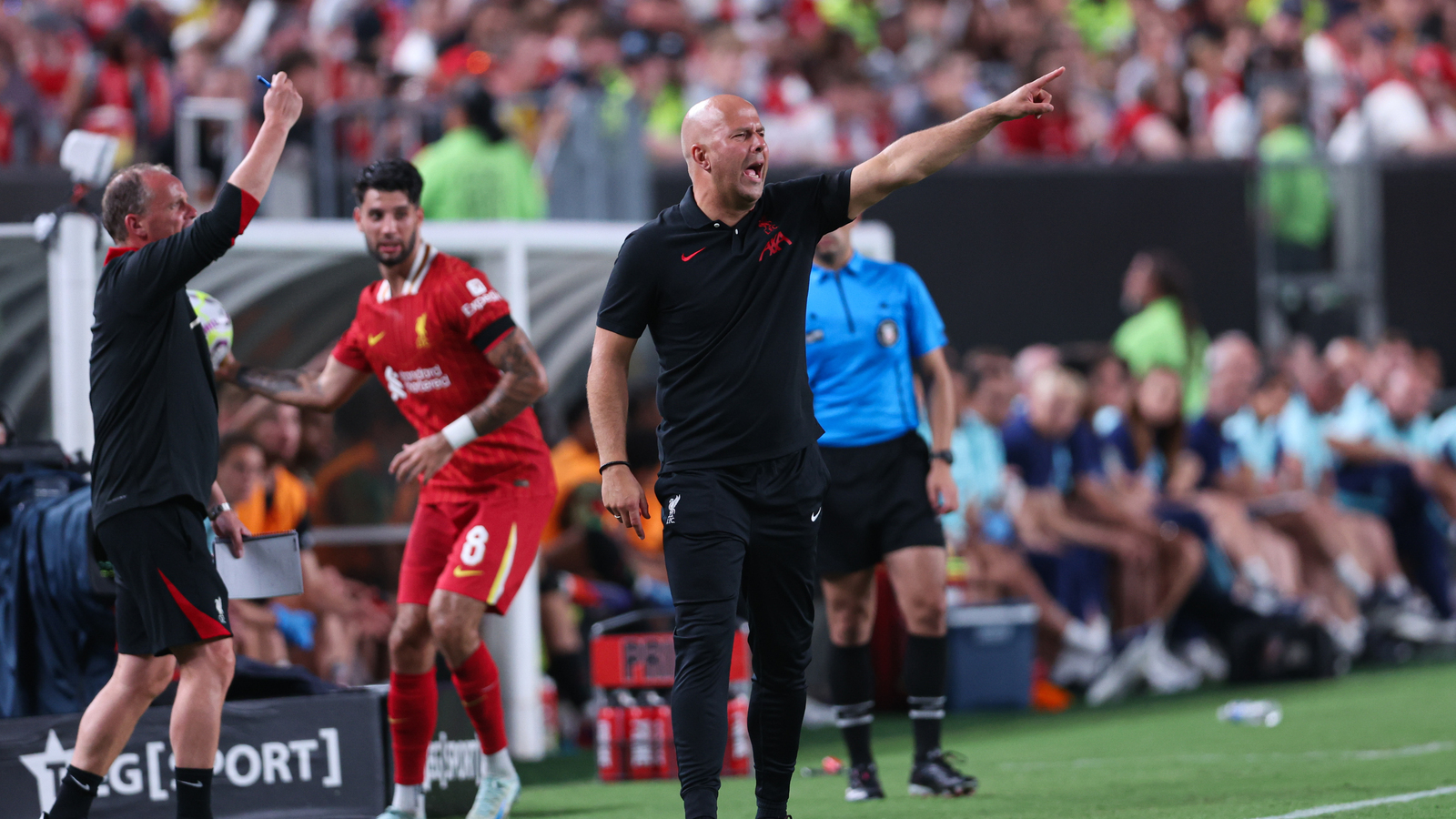
Jamie Carragher has cautioned that Liverpool might find themselves in a similar situation to Manchester United post-Sir Alex Ferguson. Pressure is mounting on manager Arne Slot.
In his piece for The Telegraph, Carragher pointed out that growing impatience from fans could lead Liverpool to make hasty decisions.
While his remarks focus on Liverpool, they echo a challenge that Manchester United has faced for over a decade.
Manchester United’s instability is a model to avoid
Sir Alex Ferguson secured 38 trophies during his 26 years as Manchester United manager.
Since he left in 2013, Manchester United has struggled to find managerial stability.
Different coaches have been brought in with varying strategies, yet the results remain largely unchanged.
Progress is often halted before it can take root, keeping the club in a constant state of flux.
This trend has continued this season.
After failing to win 39 of his 63 matches, Ruben Amorim was let go in January.
Amorim was initially hired as part of a broader rebuild.
Co-owner Sir Jim Ratcliffe indicated that he would give Amorim three years to prove himself, but that didn’t happen.
This lack of a clear direction reflects Carragher’s warning to Liverpool.
Issues with Erik ten Hag reveal deeper problems
The situation with Erik ten Hag showcases Manchester United’s fluctuating approach.
Doubts about his position emerged even before the end of the 2023/24 season, despite winning the FA Cup against Manchester City.
Internally, alternate options were considered, yet management chose to support him for the upcoming season.
Significant financial backing followed.
Players like Matthijs de Ligt, Noussair Mazraoui, Joshua Zirkzee, Manuel Ugarte, Leny Yoro, and Sekou Kone joined before the 2024/25 season.
The club invested around £182.5 million that summer.
Changes were also made to the coaching staff, aiming to align with Ten Hag’s vision.
However, improvement in performance was lacking.
Results stayed inconsistent, teamwork was absent, and old issues resurfaced.
By the time action was taken, the situation had worsened, leading to his dismissal shortly after public support.
The financial implications were significant, but the greater concern was the absence of a clear plan.
United’s history of commitment followed by hesitation has become increasingly common.
Carragher’s warning highlights a modern trend
Carragher’s concerns extend beyond Liverpool.
In today’s football, patience with managers is dwindling.
Even successful managers can find their positions uncertain if performance dips.
Pressure is ever-present, leading to decisions often based on immediate results rather than a long-term strategy.
Manchester United exemplifies this shift.
Instead of cultivating a clear identity, the club has frequently changed paths.
Each new manager brought a different approach but failed to receive the stability needed for full implementation.
Liverpool could face a similar risk if pressure on Slot continues to intensify.
Moving forward, what Manchester United must change
Carragher’s comments raise a vital question for Manchester United.
The club is once more at a crossroads regarding its long-term direction.
Since becoming interim manager in January, Michael Carrick has brought a sense of stability.
United has lost just once in ten matches since his return.
While Carrick has improved performances, doubts remain about his fit within a broader vision.
There has been little indication that United is seeking a clearly defined elite managerial target, despite previous commitments to this aim.
This uncertainty has consistently hampered progress.
To advance, the next manager cannot follow a similar pattern.
It must be part of a long-term plan, aligned with recruitment efforts, and supported through challenging phases.
Without this shift, the cycle Carragher highlighted is likely to continue.
A warning for Liverpool to heed
Although Carragher addressed Liverpool, his comments reflect the risks of losing stability.
Manchester United’s experience over the last decade illustrates how quickly a club can slip into a cycle of persistent change.
Breaking this cycle demands clear decision-making and a commitment to long-term goals—something United is still pursuing.
For Liverpool, the message is clear.
For Manchester United, it remains a challenge they are striving to overcome.