
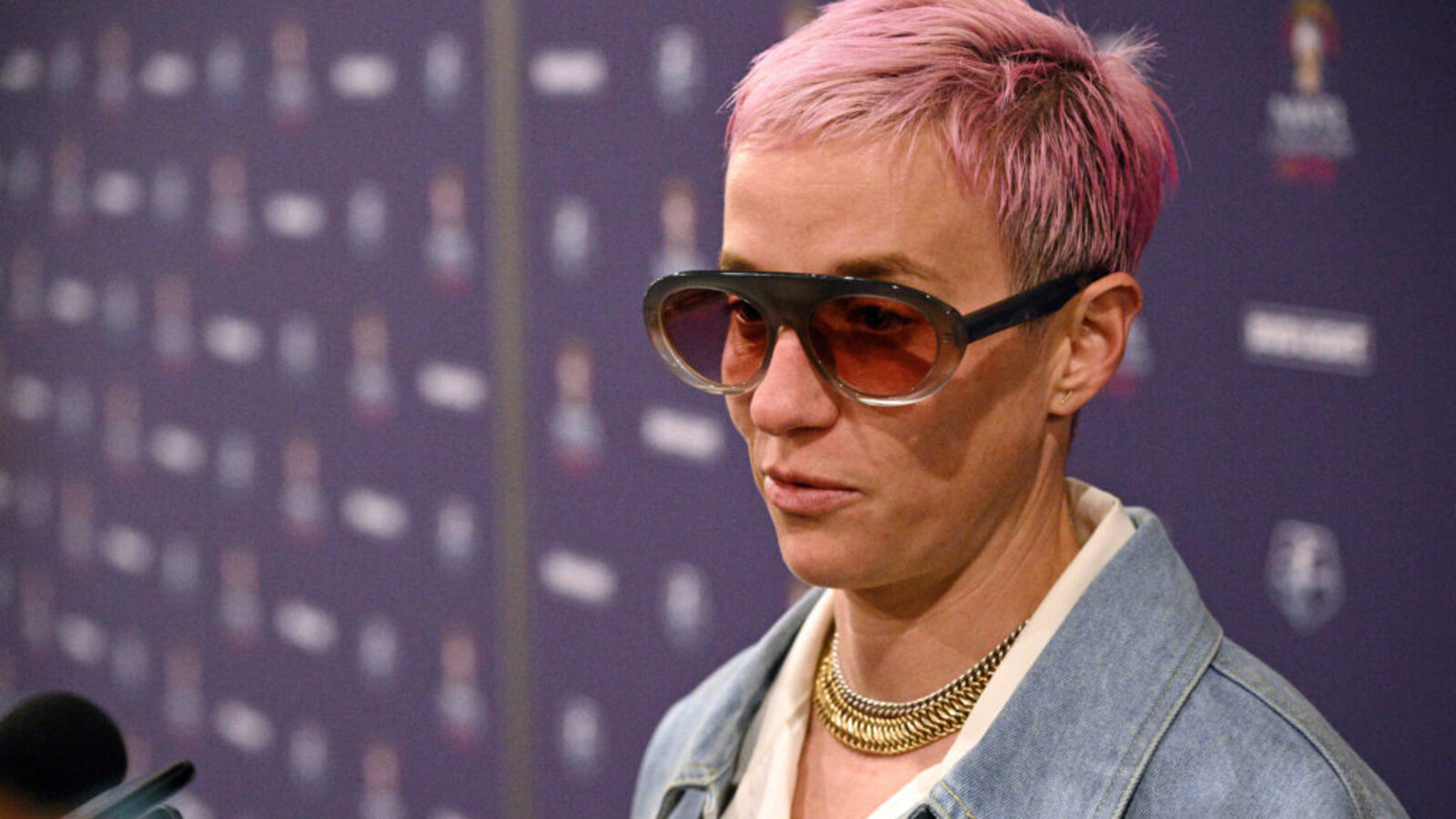
Megan Rapinoe, the retired American soccer player known for her advocacy and achievements, has raised significant discussion once again. This time, it’s about her strong opposition to new guidelines issued by the International Olympic Committee (IOC).
The policy aims to address ongoing debates about participation in elite women’s athletic competitions, receiving both support and criticism from different sectors of the sports community.
In March, the IOC introduced updated regulations intended to maintain fairness, safety, and the integrity of women’s events. A key element of this framework is a requirement for athletes wanting to compete in the female category to undergo screening to verify the absence of the SRY gene. This measure aims to establish a clear biological standard for eligibility in these divisions.
The IOC stated, “Eligibility for the female category is to be determined in the first instance by SRY gene screening to detect the absence or presence of the SRY gene. Based on scientific evidence, the IOC believes that the presence of the SRY gene is fixed throughout life and indicates male sex development. Additionally, the IOC finds that SRY gene screening via saliva, cheek swab, or blood sample is less intrusive than other methods.”
The IOC views this measure as a science-based advancement, emphasizing minimal intrusion while aiming for fair conditions for female competitors. Supporters argue that these standards could preserve opportunities specifically for women in high-level sports.
Rapinoe, who has won an Olympic gold and multiple World Cup titles, expressed her views during a recent episode of her “A Touch More” podcast. She voiced strong concerns about the IOC’s actions and questioned their true intentions behind the policy changes.
“Unfortunately, we have to say that all in the same breath as a really horrible rule came out from the International Olympic Committee,” Rapinoe stated. “They announced a new policy that they’re calling, I can’t even believe they’re calling it this because it has nothing to do with protecting women. I feel like two people who played at the highest level for every competition don’t agree with this and never saw it as an issue.”
She also challenged the idea of strict biological categories, arguing that human physiology is more complex than simple divisions. Rapinoe expressed worry that the testing requirements could unfairly target many athletes and serve to enforce a narrow definition of womanhood in sports.
“We know that biology is not just nice and clean, fitting into one category or another. So, now we’re subjecting all women and everyone identifying as women to invasive testing that seems aimed at narrowing down to a certain type of woman. Is that really the goal here?”
Her comments sparked reactions across social media and sports discussions. Many individuals pushed back, arguing that Rapinoe’s stance overlooks the realities faced by female athletes who compete under expectations of fair competition based on biological differences.
Critics expressed that Rapinoe undermines the foundation that allowed her successful career to flourish. They maintain that protecting women’s categories is crucial for the next generation of talented athletes to pursue excellence without facing unnecessary barriers or disadvantages.
The discussions surrounding the policy reveal deeper tensions in modern sports governance. While some celebrate the IOC’s decision as a necessary move to protect women’s divisions, others, like Rapinoe, see it as an overreach that complicates inclusion and personal identity.
While opinions remain divided, the new guidelines appear to be moving forward as the IOC’s official position. Rapinoe’s public dissent, although unlikely to change the IOC’s trajectory, highlights her commitment to engaging on important issues in athletics.