
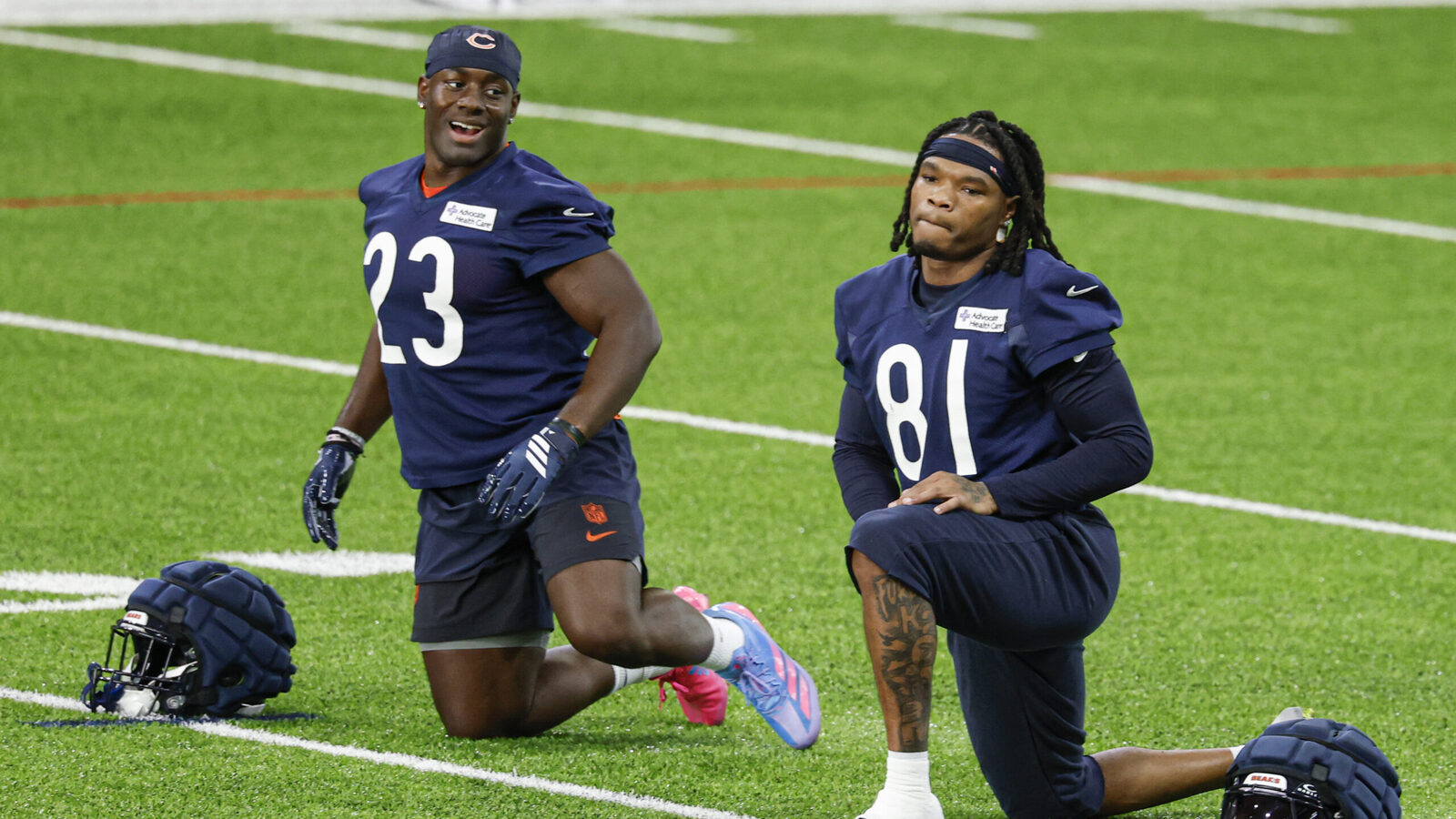
Wrecking crews are preparing to demolish Soldier Field in Chicago, the NFL’s oldest and smallest stadium, as part of a $4.7 billion replacement project that the Bears have pinned their franchise’s future on. This marks a shift in real estate priorities where stadium demolition is viewed not just as an end, but a lucrative real estate opportunity. Over a dozen iconic sports venues around the globe are slated for similar fates by 2030, driven more by financial models than by structural decay.
A Multi-Billion Dollar Wrecking Spree
The Bears’ leadership, including president and CEO Kevin Warren and chairman George McCaskey, have committed $2 billion toward a new domed stadium that will accommodate around 65,000 fans—an unusually significant private investment in the context of the NFL. Comparatively, Nashville’s Nissan Stadium replacement is expect to cost $2.1 billion, with $1.26 billion covered by public funds, making it one of the largest taxpayer-funded stadium projects in U.S. history.
Meanwhile, the Browns in Cleveland have escalated their Brook Park project to approximately $2.4 billion, combining private investment with around $600 million in state-backed bonds. Buffalo is also seeing a new Highmark Stadium, exceeding $2 billion and set to open in time for the 2026 season, while the phased demolition of the existing structure is planned from May 2026 to March 2027. The renovation of Jacksonville’s EverBank Stadium is likewise projected to reach $1.4 billion, with a balanced public-private financing split. Collectively, these initiatives across various global markets account for tens of billions in demolition and new stadium projects despite many of the existing venues being structurally sound.
The Bears Haven’t Actually Decided
Jan 18, 2026; Chicago, IL, USA; Los Angeles Rams linebackers Josaiah Stewart (10) and Byron Young (0) leave the field after an NFC Divisional Round game against the Chicago Bears at Soldier Field. Mandatory Credit: Matt Marton-Imagn Images
Discussions among Chicago fans reveal a missing piece in the public analysis. The Bears are now considering potential stadium locations in Arlington Heights, Illinois, and Hammond, Indiana, with CEO Kevin Warren indicating a decision by late spring or early summer 2026. Governor JB Pritzker has stated that a new stadium in Chicago is “no longer an option,” effectively sidelining previous proposals. Ongoing negotiations in the Illinois General Assembly have stalled over the cost to taxpayers and obligations related to Soldier Field renovation debts. Although the $4.7 billion projection and $2 billion private commitment are substantial, no groundbreaking is imminent. Notably, the Bears can terminate their Soldier Field lease in 2026 with a payment of approximately $84 million.
Structurally Sound, Financially Dead

May 8, 2026; Lake Forest, IL, USA; Chicago Bears tight end Sam Roush (87) speaks during Rookie Minicamp at Halas Hall. Mandatory Credit: Kamil Krzaczynski-Imagn Images
Fans often assume that old stadiums are demolished due to structural issues, yet many, like Old Trafford and San Siro, have stood the test of time, still effectively serving thousands. The real issue lies in modern revenue models necessitating the expansion of seating, premium seating, and mixed-use development, which older structures cannot provide.
The Taylor Swift Math

May 8, 2026; Lake Forest, IL, USA; Chicago Bears tight end Sam Roush (87) runs with the ball during Rookie Minicamp at Halas Hall. Mandatory Credit: Kamil Krzaczynski-Imagn Images
One critical revenue source rarely considered on stadium balance sheets is concert income. A modern NFL stadium’s profitability is as likely to come from marquee events hosted outside the football season—like concerts and WrestleMania—as from traditional games. Naming rights for venues like SoFi Stadium can exceed $30 million annually, bolstering team profitability. In contrast, Soldier Field lacks the capacity and infrastructure to host large events and consequently fails to compete in earnings.
One Stadium Chicago Wants to Save

May 8, 2026; Lake Forest, IL, USA; Chicago Bears defensive back Dillon Thieneman (31) warms up during Rookie Minicamp at Halas Hall. Mandatory Credit: Kamil Krzaczynski-Imagn Images
However, Soldier Field’s demolition is not a certainty. In February 2026, the Chicago Park District announced plans for a $630 million transformation of the century-old venue into a year-round concert and event space, providing $130 million for direct upgrades and $500 million for surrounding infrastructure improvements. With Governor Pritzker’s acknowledgment that new stadium plans in the city are off the table, it appears the NFL’s oldest stadium may outlive its primary tenant.
Racing the Clock at San Siro

May 8, 2026; Lake Forest, IL, USA; Chicago Bears tight end Sam Roush (87) warms up during Rookie Minicamp at Halas Hall. Mandatory Credit: Kamil Krzaczynski-Imagn Images
Meanwhile, AC Milan and Inter Milan finalized their acquisition of San Siro on November 5, 2025, paying €197 million for the stadium and adjacent land to avoid more stringent heritage protections which would complicate demolition under Italian law. The clubs plan to build a new 71,500 seat venue by the 2030-31 season in anticipation of Euro 2032, demonstrating a proactive approach to facility development.
RFK Vanished in Roughly a Year
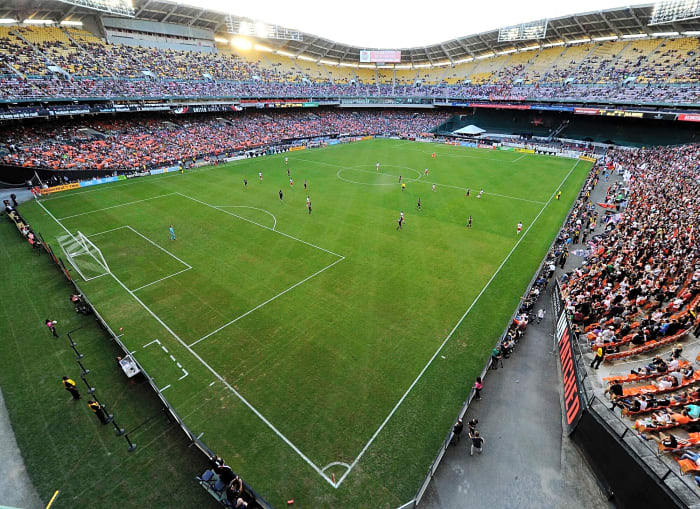
Oct 22, 2017; Washington, DC, USA; View of RFK Stadium during a D.C. United game. Mandatory Credit: Brad Mills-Imagn Images
After its last game in 2017, RFK Stadium remained largely deserted. By January 2026, reports indicated significant demolition had occurred following the District’s acquisition of the site. A complete clearance followed within a year, underscoring how quickly political will can turn a historical venue into a vacant lot. The District has committed around $1 billion for a new stadium on the same land, bolstered by a substantial private investment from Commanders’ owner Josh Harris.
The Machine Behind the Wrecking Ball

May 8, 2026; Lake Forest, IL, USA; Chicago Bears defensive back Dillon Thieneman (31) runs during Rookie Minicamp at Halas Hall. Mandatory Credit: Kamil Krzaczynski-Imagn Images
Each of these demolitions is driven by a similar economic model. In the U.S., municipalities typically shoulder 40 to 60 percent of the costs for new stadium construction, while teams retain most operational profits. In Nashville, taxpayers funded over half the costs for Nissan Stadium, resulting in significant financial burdens for local households. The land under the old venues often becomes a prime target for residential and commercial redevelopment, further revitalizing the area.
One Stadium Found Another Way
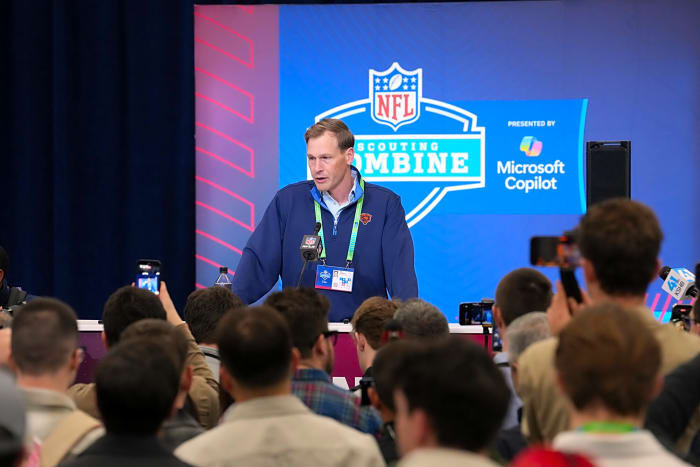
Feb 24, 2026; Indianapolis, IN, USA; Chicago Bears coach Ben Johnson speaks at the NFL Scouting Combine. Mandatory Credit: Kirby Lee-Imagn Images
However, not all stadiums face demolition. In February 2026, plans were announced to redevelop Rome’s Stadio Flaminio for over €480 million while preserving its iconic features. This project aims to blend modern improvements with historical architecture, indicating that preservation and profitability can coexist. If Stadio Flaminio’s renovation succeeds, it may serve as a model for future projects, challenging the notion that modernization always necessitates demolition.
The Cascading Arms Race
As a few clubs modernize their facilities, others must follow suit or risk falling behind in an increasingly competitive revenue-driven landscape. The planned expansions and replacements, such as Manchester United’s Old Trafford and the new San Siro, create pressure on other teams to enhance their venues or face disadvantages.
2027 And 2028 Will Break Everything Open
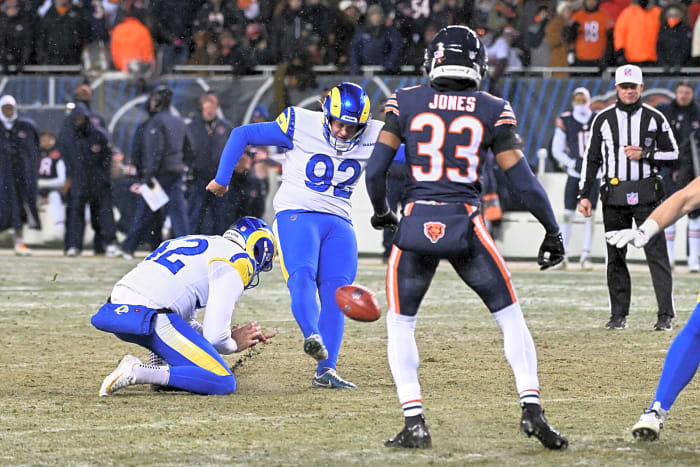
Jan 18, 2026; Chicago, IL, USA; Los Angeles Rams placekicker Harrison Mevis (92) kicks a game-winning field goal against the Chicago Bears during an NFC Divisional Round game at Soldier Field. Mandatory Credit: Matt Marton-Imagn Images
Nashville’s new Nissan Stadium is projected to open in 2027, while Valencia is preparing to move into Nou Mestalla as demolition of the old stadium concludes. Buffalo’s Highmark Stadium demolition will continue until March 2027, coinciding with the opening of their new venue. Jacksonville aims to have its “Stadium of the Future” ready by August 2028, and Cleveland’s dome is targeting a 2029 opening. This period will witness a significant transformation of sporting landscapes across multiple continents.
The Bill Your City Already Signed

May 8, 2026; Lake Forest, IL, USA; Chicago Bears offensive lineman Logan Jones (54) speaks during Rookie Minicamp at Halas Hall. Mandatory Credit: Kamil Krzaczynski-Imagn Images
Finally, it’s crucial to consider that cities often bear a significant part of the financial burden for construction, while teams enjoy most of the revenue generated from events and naming rights. The land beneath old stadiums is frequently repurposed for residential and commercial use, providing additional revenue streams that are seldom included in discussions about public funding. Whether cities will adopt models like those seen in Rome’s Flaminio and Madrid’s Bernabéu renovation will influence the future of stadium preservation. Fans might want to question their local leaders with a key inquiry.
Would you rather your city preserve its stadium or bankroll a new one?